
Decoding AAMI PB70: The Strategy for Precision Risk Matching with Disposable Sterile Surgical Gowns
1. The Gold Standard: AAMI PB70
Before selecting protective apparel, one must understand the benchmark. The AAMI (Association for the Advancement of Medical Instrumentation) PB70 standard is the globally recognized guideline for classifying medical protective apparel. It assesses a material's ability to block liquid primarily through the Impact Penetration Test and the Hydrostatic Pressure Test.
Simply put, the higher the level, the greater the ability to block high-velocity fluid splashes and viral penetration.
2. Understanding the Critical Zones
The entire surgical gown does not always require the same level of protection. The AAMI standard introduces the concept of "Critical Zones":
Zone A (Critical Areas): Includes the front of the gown (from the neck down to the knees) and the sleeves (from the cuff to above the elbow). These are the high-risk areas most likely to contact blood, body fluids, and the sterile field.
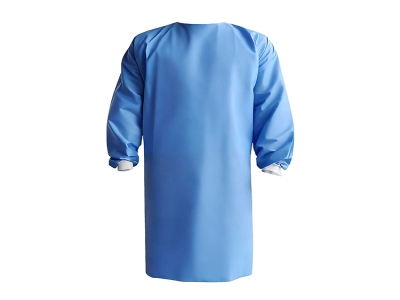
Zone B (Non-Critical Areas): Such as the back. These areas often use lighter, more breathable material for heat dissipation and basic barrier protection.
A high-quality Disposable Sterile Surgical Gown will feature special reinforcement (such as double-layered materials or laminates) in the critical zones to ensure core protection while optimizing overall cost and comfort.
3. Matching the Armor: Which Level Does Your Surgery Need?
Based on the product lines typically offered by professional suppliers like Jining Jianda Medical, surgical gowns can be categorized into the following application tiers:
AAMI Level 2 (Low Risk): Standard Protection
Applicable Scenarios: Procedures with minimal fluid exposure or negligible splash risk (e.g., ophthalmic surgery, tonsillectomy, minor minimally invasive procedures).
Material Characteristics: Typically constructed from standard SMS non-woven fabric, offering basic liquid resistance, lightness, and excellent breathability.
AAMI Level 3 (Moderate Risk): Enhanced Protection
Applicable Scenarios: Procedures with medium fluid exposure and potential splashing (e.g., mastectomies, arthroscopy, gastrointestinal surgeries).
Material Characteristics: Critical zones are often treated with chemical coating or composite layers to withstand higher hydrostatic pressure, preventing fluid penetration under force.
AAMI Level 4 (High Risk): Ultimate Barrier
Applicable Scenarios: Long, high-blood-loss procedures (e.g., C-sections, cardiac bypass, total joint replacement, severe trauma). Surgeons' arms may be immersed in fluids for extended periods.
Material Characteristics: This is the highest level. It requires not only liquid resistance but also must pass the ASTM F1671 Viral Penetration Test, meaning it blocks viral pathogens (such as HBV, HIV). Typically made from microporous film laminate composites, providing maximum biological safety assurance.
4. Rejecting the "One Size Fits All" Procurement Strategy
Many hospitals, for ease of management, procure gowns of a single specification. This is a double fallacy:
Using Level 4 for Everything: While safe, it is costly and causes unnecessary thermal stress for staff performing short, low-risk procedures.
Relying on Level 2/3 for Trauma: This exposes staff to severe occupational risks during unexpected, high-volume blood loss procedures.
The intelligent strategy is to establish a Tiered Inventory system. Procurement should use historical surgical data to mix and match gown levels (e.g., allocate more Level 4 gowns to Orthopedics and OB/GYN, and more Level 2/3 to General Surgery and Ophthalmology).
Conclusion
The choice of a surgical gown is essentially an exercise in evidence-based risk management. The value of a Disposable Sterile Surgical Gown lies not in the garment itself, but in the rigorous engineering and testing it represents. By understanding AAMI levels, healthcare facilities can find the perfect balance between protecting the safety of their personnel, ensuring a sterile environment for patients, and controlling operational costs.