
From Absorbency to Lock-in Technology: The Polymer Science and Skin Care Logic Behind Disposable Underpads
1. Core Technology: "Liquid Solidification" via SAP Ordinary underpads often rely solely on fluff pulp for absorption, which tends to leak back (rewet) under pressure. The core of a high-quality medical underpad lies in the application of Super Absorbent Polymer (SAP).
Phase-Change Locking: Upon contact with urine or body fluids, SAP particles instantly absorb dozens to hundreds of times their own weight in liquid, rapidly converting it into a gel form.
No Rewet: This change in physical state is stable. Even when a patient's body weight presses against the wet pad for extended periods, moisture is not "squeezed" back to the surface. This "lock-in" capability is crucial for keeping the contact surface continuously dry.
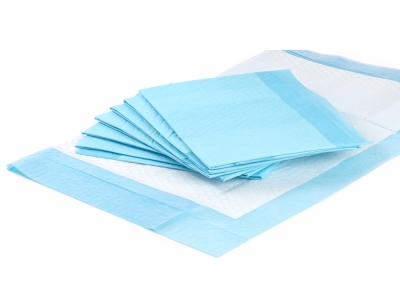
2. Channeling Structure: The Fluid Dynamics of Diamond Embossing Observing Jianda Medical’s underpads reveals a surface covered in unique Diamond or Rhombus Embossing. This is designed not for aesthetics, but based on fluid dynamics.
Rapid Diffusion: The embossing creates micro-channels that encourage fluid to spread quickly outwards rather than pooling at a single point of discharge.
Maximized Utilization: By guiding fluid across the entire absorbent core of the pad, this design prevents the wastefulness of a "soaked center, dry edges" scenario and also prevents overflow risks caused by localized saturation.
3. Skin Protection: Breaking the Vicious Cycle of IAD Incontinence-Associated Dermatitis (IAD) is inflammation caused by prolonged skin exposure to the moist environment of urine and feces, leading to stratum corneum damage and pH alteration. Premium underpads utilize a Soft Non-woven Top Sheet combined with a breathable structure to construct a "dry microclimate."
Isolating Irritants: Rapid infiltration technology reduces the contact time between the skin and harmful enzymes in waste.
Breathability: Although the bottom layer is a leak-proof PE film, a rational structural design allows for some heat dissipation, reducing skin maceration caused by sweat and humidity, thereby protecting the patient's fragile skin barrier.
4. Cost Control from an Institutional Perspective For hospitals and nursing homes, purchasing cheap underpads with poor absorbency may seem like saving on unit costs, but it actually drives up overall operational costs.
Reduced Change Frequency: High-absorbency underpads can handle multiple voidings, reducing the workload (and associated labor costs) for nursing staff who otherwise have to frequently change sheets and pads.
Lower Laundry Costs: A durable PE back sheet effectively prevents leakage, significantly decreasing the frequency of washing, sanitizing, and replacing reusable linens.
Conclusion A seemingly simple underpad is, in reality, a combination of non-woven technology, polymer chemistry, and ergonomics. Choosing professional underpads with efficient lock-in capabilities and superior channeling design is not only a responsibility toward patient skin health but also a wise strategy for medical institutions to achieve refined care management and control hidden costs.